

where-to-ski
A Full Guide to the Skiable Mountain Ranges of Planet Earth
Every major mountain range with ski resorts worth knowing about, region by region
Most seasonaires end up knowing one mountain range extremely well and almost nothing about the rest of the world's skiable terrain. That's natural — you go where the job is — but it's worth knowing the wider picture, both for planning a second or third season somewhere completely different, and just for understanding where your resort sits in the global picture. This is that picture: every major skiable mountain range, grouped by continent, with what makes each one distinctive.
Europe
The Alps
The largest and most developed ski region on Earth, spanning France, Switzerland, Austria, Italy, Germany, and a sliver of Slovenia. No other range comes close to its density of resorts, lift infrastructure, or connected ski areas — it's possible to ski across national borders without removing your skis in places like Portes du Soleil or the Dolomiti Superski. This is also where "doing a season" as a concept is most established: the seasonaire industry (chalet work, resort jobs, staff accommodation) is most mature here, which is a large part of why it's the default first-season choice for most people reading this site.
Sub-regions worth knowing by name: the French Trois Vallées and Espace Killy (Val d'Isère/Tignes), the Austrian Arlberg, the Swiss Four Valleys and Jungfrau region, and the Italian Dolomites (visually the most distinctive — dramatic limestone peaks rather than the more classic snow-capped Alpine look).
The Pyrenees
The border range between France and Spain, with a small extension into Andorra. Lower altitude and less snow-reliable than the Alps on average, but Andorra in particular (Grandvalira, Pas de la Casa) has invested heavily and offers a genuinely large, modern ski area at a noticeably lower cost of living than the main Alpine resorts — a real consideration for anyone budget-conscious about a season.
The Scandinavian Mountains
Running through Norway and Sweden. Lower vertical than the Alps by a wide margin, but compensates with reliable, cold, dry snow and a very different atmosphere — smaller, quieter resorts, long daylight hours in spring, and in the far north, genuine chances of skiing under the northern lights. Åre in Sweden is the best-known resort for a full season.
The Carpathians and Balkans
Romania, Bulgaria, and parts of the former Yugoslavia. Meaningfully cheaper than Western Europe, with a growing but still developing lift infrastructure. Not yet a major seasonaire destination, but worth watching — Bansko in Bulgaria has become a genuine budget alternative to the Alps for both skiing and cost of living.
North America
The Rocky Mountains
Running from British Columbia down through the western US to New Mexico — the dominant North American range and, alongside the Alps, one of the two ranges most seasonaires will end up choosing between. Colorado (Vail, Aspen, Breckenridge, Steamboat) and Utah (Alta, Park City, Snowbird) have the highest resort density; Wyoming (Jackson Hole) and Montana (Big Sky) are lower-density but higher-terrain, more expedition-feeling options. Famous for consistently dry, light "champagne powder" snow, particularly in Utah and Colorado, due to the continental climate.
The Sierra Nevada
California's range, distinct from the Rockies both geologically and in character. Lake Tahoe is the hub — a cluster of resorts (Palisades Tahoe, Northstar, Heavenly, Kirkwood) around a genuinely large alpine lake, with a noticeably different, more laid-back culture than Colorado. Snow tends to be heavier and wetter ("Sierra cement") than Rocky Mountain powder, which changes the skiing character considerably.
The Coast Mountains
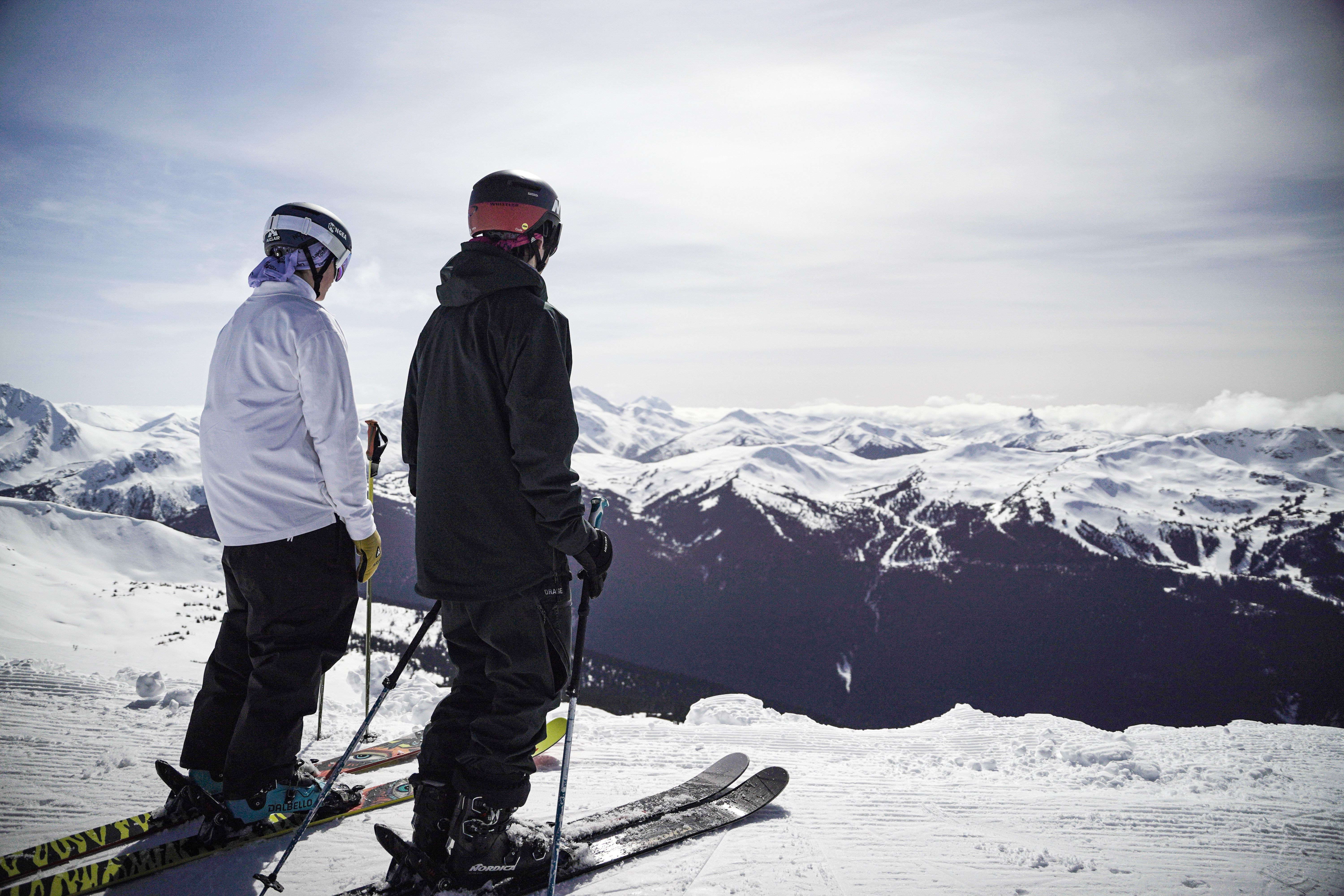
British Columbia's range, home to Whistler Blackcomb — the largest ski area in North America by lift-served terrain, and probably the single most internationally recognisable resort on the continent. Wetter, heavier snow than the interior Rockies, closer to Pacific weather systems, with a genuinely huge and diverse seasonaire community given the resort's scale.
The Laurentians and Eastern Townships
Quebec's ski country, smaller in vertical terms than anything out west but with its own strong, francophone seasonaire culture and considerably lower cost of living than the major western resorts. Worth knowing about for anyone specifically wanting a French-speaking season without doing a visa process for France.
South America
The Andes
The world's longest continental mountain range, and the one place that offers genuine Southern Hemisphere skiing — meaning a ski season that runs June to October, opposite the Northern Hemisphere calendar. This makes the Andes uniquely useful for anyone wanting to do two ski seasons in one calendar year (a Northern Hemisphere winter season followed immediately by a Southern Hemisphere one, or vice versa). Chile (Valle Nevado, Portillo) and Argentina (Las Leñas, Cerro Catedral near Bariloche) have the main resort concentrations. Smaller, less commercially developed than European or North American resorts, with a correspondingly smaller (but growing) international seasonaire presence.
Oceania
The Southern Alps (New Zealand)
New Zealand's South Island range, and — alongside the Andes — the other major Southern Hemisphere option, on the same June–October calendar. Queenstown (Coronet Peak, The Remarkables) and Wanaka (Cardrona, Treble Cone) are the two main hubs, both with strong, well-established international seasonaire scenes — New Zealand has long been a deliberate, popular choice for gap-year and career-break skiers specifically because of the reversed season and relatively accessible working holiday visa route.
The Australian Alps
Much smaller and considerably less snow-reliable than New Zealand, but Australia's own ski resorts (Thredbo, Perisher) run a real, if short and weather-dependent, season on the same Southern Hemisphere calendar.
Asia
The Japanese Alps and Hokkaido
Japan has become one of the most sought-after ski destinations globally over the last decade, and for one specific reason: snow volume. Hokkaido resorts, above all Niseko, receive some of the most reliable, highest-volume snowfall on Earth, driven by Siberian weather systems crossing the Sea of Japan. The culture is also distinct from Western resorts — onsen (hot spring) culture, resort food entirely unlike Alpine or Rocky Mountain fare, and a rapidly internationalising seasonaire scene as demand has grown.
The Himalayas and Central Asian Ranges
India (Gulmarg), and increasingly Kazakhstan and Kyrgyzstan, offer genuine high-altitude skiing at a fraction of the cost of established Western destinations. Lift infrastructure is far less developed — this is closer to backcountry/ski-touring territory than resort skiing in most cases — but it's a growing frontier for a very different kind of season, generally suited to more experienced skiers rather than a first season.
The Alborz and Zagros Mountains (Iran)
A genuine curiosity for most Western skiers: Iran has an established domestic ski industry (Dizin, Shemshak) with real vertical and reliable snow. Not a realistic seasonaire destination for most nationalities given visa and logistical complexity, but worth knowing it exists.
Africa
Skiing exists on the continent in a genuinely small way — Morocco's Atlas Mountains (Oukaïmeden) and South Africa's Drakensberg (Afriski, technically in Lesotho) both have functioning, small ski areas. Neither is a realistic season destination; both are curiosities rather than options, included here for completeness.
Choosing Between Them
For a first season, the Alps and the Rockies remain the two default choices for good reason: the most developed seasonaire infrastructure, the most staff jobs, the most established path for visas and accommodation. Once you've done one season, the more distinctive ranges — Japan for snow volume, New Zealand or the Andes for a reversed calendar and a second season in one year, Whistler for scale — start to make a lot more sense as a second or third-season choice, once you already know what doing a season actually involves.
Related: Best place to do a ski season | Alps vs Rockies for a ski season | Best resorts for your first ski season
Looking for a resort where you can do a season?